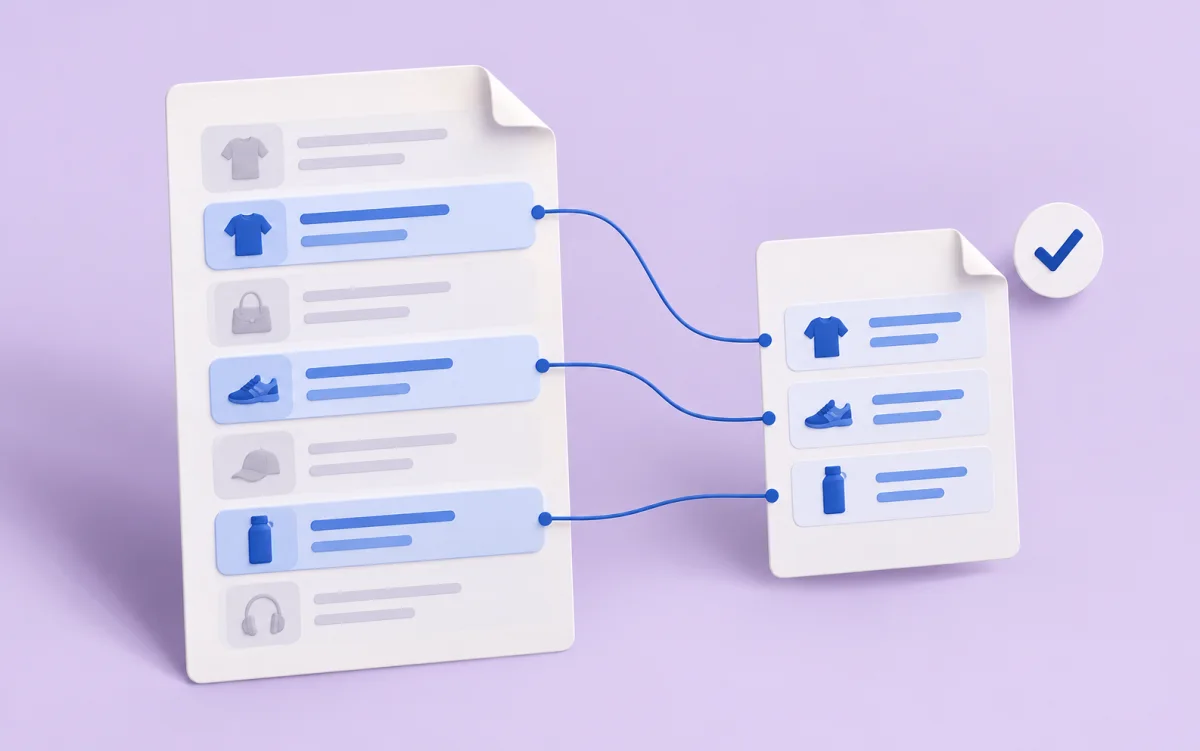
You have collected a catalog, but each recipient may need a different part of it. One needs available items, another a specific brand, and a third a set of attributes for comparison. Express these choices as explicit rules so results can be repeated and checked.
Separate two decisions: which records enter an export and which fields each record contains. Removing a column differs from excluding a product.
Choose conditions, then fields
An Akmelo export profile supports conditions on collected values: equality, text presence, empty or filled fields, and numeric comparison. Configure these in the profile. A dataset processing mode supports more complex rules; test it on a small sample first.
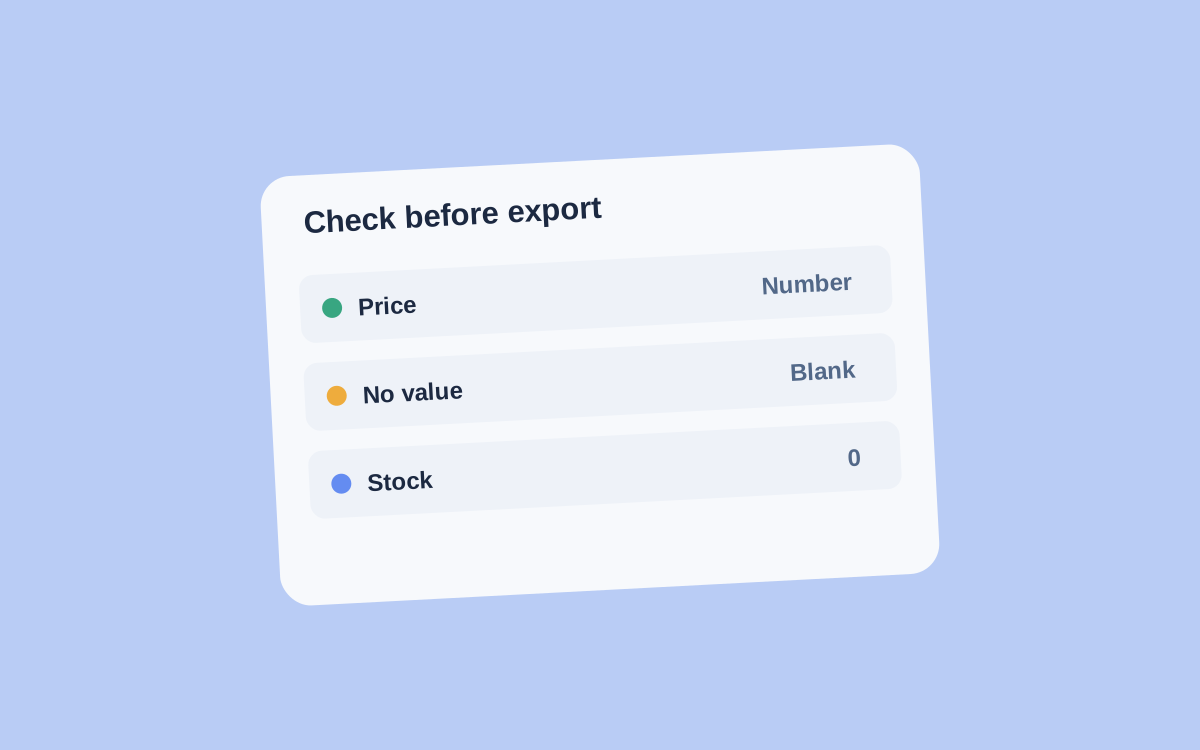
Check each condition against actual records. “Price is filled” does not mean “price is correct,” and missing is not zero. Compare a Boolean availability field with an appropriate value type rather than arbitrary text.
Then configure field mapping: source field, output name, and missing-value behavior. Keep an identifier or other agreed key if the recipient updates existing records. Otherwise the next export will be hard to match with the previous one.
Explain count differences
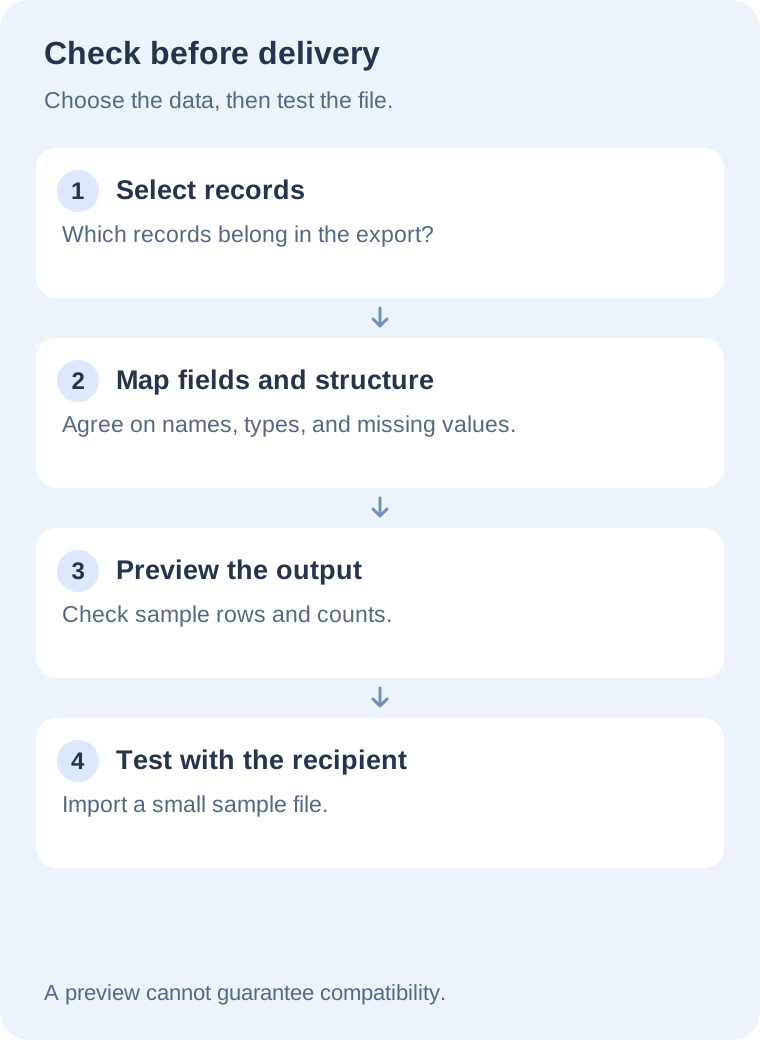 Image unavailable
The diagram separates record selection and field mapping. After these come an output sample and a check in the receiving system. If fewer records appear than expected, inspect selection conditions, transformations, and then the sample.
Compare input and output counts in Akmelo's sample. Dataset processing may leave fewer records or none. That is valid when it matches the intended rules. A sample covers only a selection and does not prove that the whole catalog is complete.
Exclusion is not deletion
A product that no longer matches an export filter has not been deleted from its source. The recipient needs a separate rule for updating its own data after filter changes. A change to mapping or filters requires a new full synchronization when using a cursor.
Start with the pre-export data checklist, then choose an output format. Keep the rules beside the configuration: which products the recipient needs, which fields are required, and how gaps are handled.