A scenario may look right in the editor, but that is not a reason to update live records yet. First see what it returns from real pages. Akmelo provides a trial run so you can check changes before publishing a live version.
The main difference between trial and live runs is where their results go. The word “trial” does not mean the run uses no resources.
Where the records go
A trial run processes data and places the result in a preview. It does not update the source's main records. You can check a draft scenario and inspect its values without replacing the live catalog.
A live run uses the published version. Its results become main records, matched by the configured key. That is why an incorrect matching rule should be caught before this step.
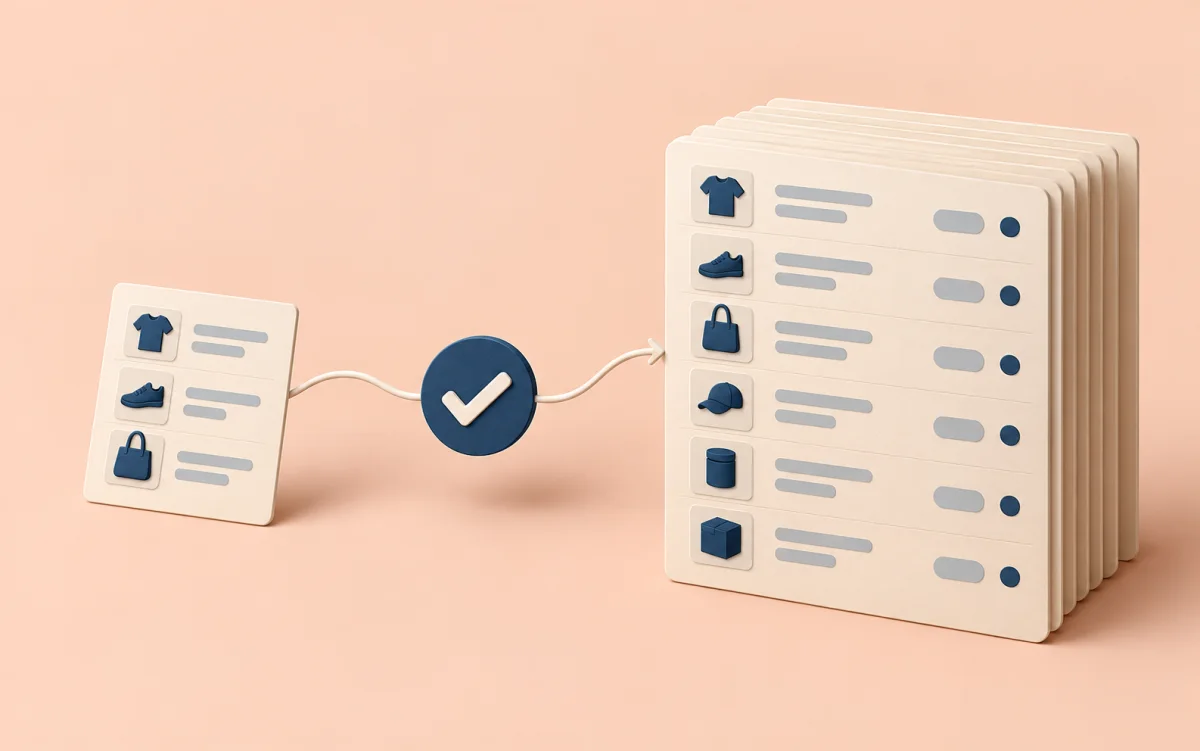
Choose a trial run to test new logic. Use a live run of the published version for the next catalog update. The illustration shows both paths.
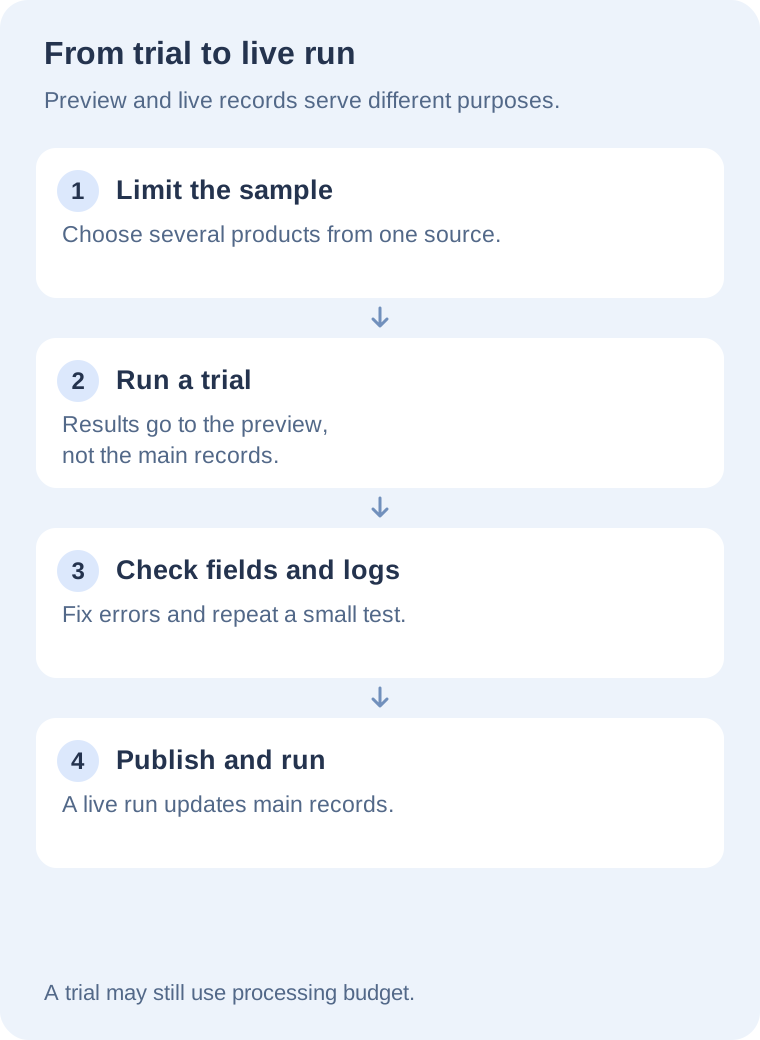 Image unavailable
What to check in the preview
Choose several different product pages. Compare price, SKU, and link with the source. Check missing values, product variants, and transitions between pages. One correct row does not prove that the entire scenario works.
Trial mode limits the volume and duration of a run. Its preview may cover only part of the catalog. Check values and page transitions in that sample before moving to live collection.
Do not confuse a preview with a data update. If the main records retain their previous values after a trial, that is expected behavior.
Why a trial still uses resources
A trial actually runs the scenario and may fetch source pages. Cloud processing is billed under the usual rules; browser operations may use their respective budget too. Keeping the result out of the main catalog does not make execution free.
Test small changes on a limited sample instead of repeating a full collection after every edit. Once the check succeeds, publish the version and run it live separately.
See the scenario documentation for the steps. If the finished result looks doubtful, follow the pre-export data checklist in either mode.